





· By Editorial Team
Decodable Books for Older Struggling Readers
Table of Contents
- Why Older Students Need Decodable Books
- High-Interest, Low-Readability Books for Middle School
- Structured Literacy Intervention for Older Students
- How to Teach Decoding to Adolescents
- Addressing Stigma and Building Reading Confidence
- Selecting and Implementing Decodable Books in Secondary Classrooms
- Frequently Asked Questions
Last Updated: September 1, 2026
Why Older Students Need Decodable Books
Decodable books for older struggling readers are specifically designed texts where nearly all words can be sounded out using phonics skills students have already been taught. When an older student reads significantly below grade level, the gap between their decoding ability and their age creates a psychological burden on top of of an existing comprehension problem. They need materials that let them practice foundational phonics without feeling infantilized.
The core problem is that many older struggling readers have spent years in systems that encouraged guessing from pictures, context, and sight words rather than systematic decoding. By middle or high school, they've developed ingrained habits: skip hard words, guess from the first letter, mumble or rely on illustrations. Decodable books interrupt this pattern by making guessing impossible. Every word is decodable with the skills they're learning, so students must engage their decoding muscles.
Reading confidence is directly tied to success. When older students experience repeated failure with grade-level text, they often disengage entirely. Decodable books give them something different: a chance to read successfully, apply new skills immediately, and see themselves as readers again.
High-Interest, Low-Readability Books for Middle School
High-interest, low-readability (Hi-Lo) books are texts written about topics that appeal to older students but controlled for readability so struggling readers can access them. A typical middle schooler wants to read about sports, adventure, mystery, and real-world topics, not picture books about animals. Hi-Lo decodables meet that demand by pairing age-appropriate content with controlled phonics vocabulary.
The difference between a babyish decodable and a Hi-Lo decodable comes down to subject matter and design. A well-designed Hi-Lo book about skateboarding tricks or the water cycle looks and feels like a "real" book a teenager might want to read. The pages have illustrations that support comprehension without giving away every word. The vocabulary, while controlled for decoding, includes interesting topic-specific words that build knowledge alongside phonics skills.
Schools often assume they must choose between decodables and "real" books. For a student reading three grades below level, standard decodables designed for younger children feel insulting. But a well-designed Hi-Lo decodable addressing a topic relevant to their age, survival skills, famous athletes, how video games work, becomes a bridge. Students read successfully, build confidence, and don't feel patronized.
Hello Decodables offers both fiction and nonfiction options structured for this purpose. The nonfiction books cover topics like animals, weather, technology, and social studies that naturally engage middle and high school readers while providing systematic phonics practice. The fiction stories feature relatable characters and situations that feel age-appropriate. Each book is 16 pages, long enough to feel like a real accomplishment but short enough to complete in one or two sittings.
Feature |
Standard Decodables (K-2) |
Hi-Lo Decodables (3-5+) |
|---|---|---|
Content Focus |
Animals, simple concepts |
Real-world topics, interests |
Visual Design |
Colorful illustrations, simple layout |
Age-appropriate graphics, realistic |
Character Age |
Toddlers, young children |
Peers or relatable figures |
Text Organization |
Simple sentences, one idea per page |
Paragraphs, logical structure |
Vocabulary Depth |
Basic sight words + phonics |
Topic-specific vocabulary included |
Best For |
Beginning readers K-1 |
Struggling readers grade 3+ |
Structured Literacy Intervention for Older Students
Structured literacy is explicit, systematic instruction in phonics, phonemic awareness, fluency, vocabulary, and comprehension (asha.org). When applied to older struggling readers, it means providing the same level of systematic instruction they should have received in early elementary, rather than assuming they "should already know this."
Many older struggling readers have significant gaps in foundational skills: weak phonemic awareness, incomplete phonics knowledge, or poor orthographic mapping (the ability to recognize and store letter patterns in memory) (peer-reviewed research). A structured literacy approach doesn't skip these steps just because the student is 12 or 14. Instead, it compresses and accelerates instruction while maintaining systematic progression.
Decodable books are the practice component of this intervention. The phonics lesson comes first, explicit, direct instruction in a specific skill like digraphs or vowel teams. Students then immediately apply that skill in a decodable text. This differs from traditional reading instruction, where students might learn a skill in isolation and encounter it randomly in a chapter book weeks later. With decodables, the connection is immediate and repeated.
For a structured literacy intervention to work with older students, three elements must align: explicit, systematic phonics instruction following a clear scope and sequence; decodable books that match that sequence exactly; and accountability for skill mastery. Teachers need to know which students have solidified each skill and which need more practice before advancing.
How to Teach Decoding to Adolescents
Teaching decoding to adolescents requires a shift in mindset from elementary phonics instruction. The mechanics are the same, but the delivery, pacing, and emotional context differ. Adolescents are acutely aware of their reading level relative to peers and have often internalized shame about struggling. Instruction must respect their age while addressing foundational gaps.
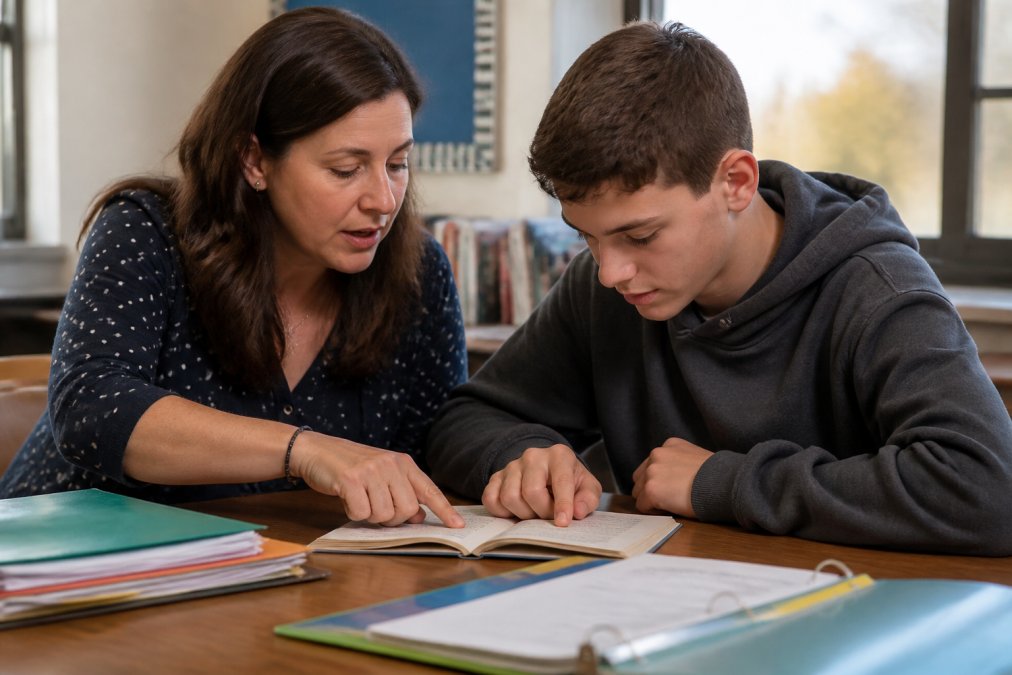
The first principle is acceleration with dignity. Adolescents don't need slower instruction; they need denser instruction. A 14-year-old can learn the /sh/ digraph in one explicit lesson and move to application immediately. The pace is faster, but the instruction is no less explicit.
The second principle is explicit blending instruction. Many older struggling readers have never been explicitly taught how to blend sounds into words. They've been encouraged to guess, skip, or rely on context. Direct instruction, "Say the sounds in order. Stretch them together. Say the whole word", is essential. Blending is a skill that must be taught.
The third principle is immediate application in connected text. After a 10-minute phonics lesson, students should read a decodable book using the skill they just learned. This is where the isolated skill becomes automatic and connected to meaning. vision and eye strain.
Decoding instruction for older students should happen in small groups of 3-5 students at similar skill levels. Whole-class instruction rarely works because the range is too wide. Small-group instruction allows teachers to target exact skills and move at an appropriate pace.
Decodable books provide the volume of practice students need to move from conscious, effortful decoding to automatic word recognition. A student reading one decodable book per day gets 800-1,000 words of practice with newly taught skills (peer-reviewed research). Over time, words that required sounding out become instantly recognized, freeing cognitive resources for comprehension.
Addressing Stigma and Building Reading Confidence
The emotional component of reading intervention with older students is critical. A 12-year-old reading at a first-grade level has spent years aware of this gap. They've sat through read-alouds feeling different and watched peers read independently while they struggled. By the time they enter a structured literacy program, their confidence is often severely damaged.
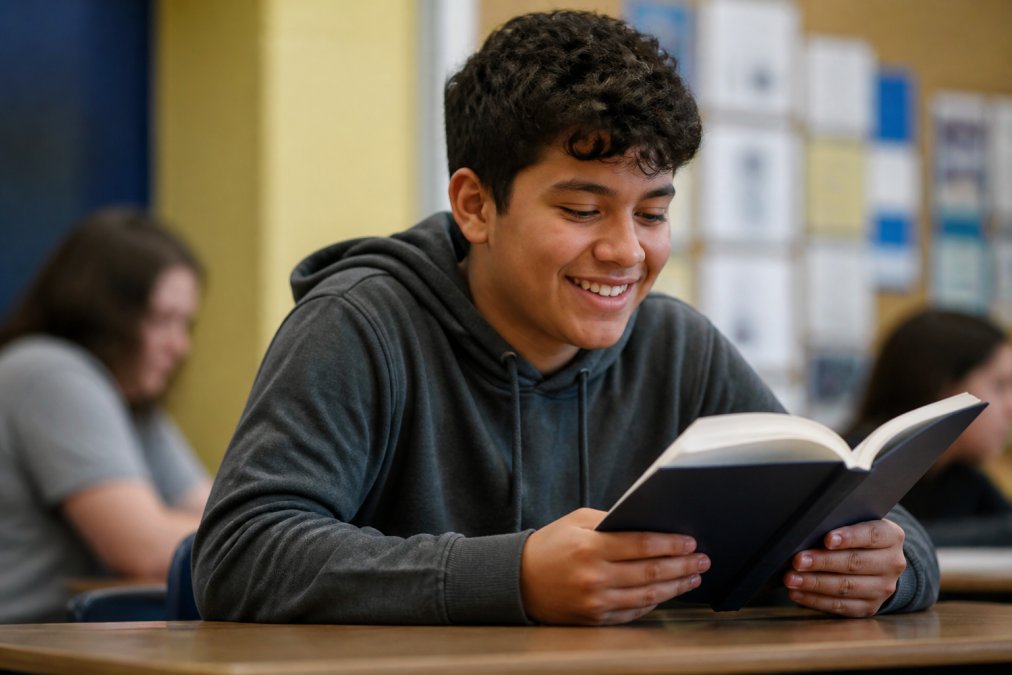
Decodable books rebuild confidence because they guarantee success. Every word on the page is decodable. There's no guessing, no hitting a wall of unfamiliar words, no shame. A student who reads a 16-page decodable book from start to finish has experienced success and completed something meaningful.
The design of the books themselves helps address stigma. A decodable about skateboarding or space exploration doesn't look like a book for little kids. The illustrations are realistic, not cartoonish. The layout is clean and mature. When an older student holds the book, they feel like they're reading a real book that happens to be at their reading level.
Teachers can further reduce stigma by reframing the intervention. Instead of "remedial reading," call it "decoding intensive" or "phonics acceleration." Language matters. The same instruction framed differently can feel like support rather than remediation. Additionally, grouping students strategically, ensuring the intervention group includes students at various grade levels, helps normalize the experience.
Building reading confidence also requires celebrating progress explicitly. When a student moves from struggling with a digraph to reading it automatically, that's worth acknowledging. Teachers should track and share progress data with students, helping them see their own growth. Confidence grows when students have evidence of improvement.
Selecting and Implementing Decodable Books in Secondary Classrooms
Selecting decodable books for secondary students requires matching three variables: phonics skill level, reading ability, and content interest. A student learning the /oi/ vowel team, reading at a 2nd-grade level, and interested in sports needs a book that teaches /oi/ words, reads at approximately 2nd-grade level, and features sports content. Finding that intersection requires a library with depth and organization.
The Hello Decodables Complete Nonfiction Library includes 60 books organized by phonics skill progression. Our nonfiction decodables use real photographs and the book cover color are turquoise, green and blue. The simple to complex skill structure makes selection straightforward. When you finish teaching a phonics skill, you know exactly which books target that skill. Fiction books are also available but the images are black and white clipart and cover colors are pink, orange and yellow. Every nonfiction title is based on a science or social studies theme. In other words, very high interest to older students.
Implementation in a secondary classroom typically looks like this: students work in small groups based on phonics skill level. Each group spends 10-15 minutes on explicit phonics instruction, then 15-20 minutes reading a decodable book practicing that skill. The teacher circulates, listening to students read, providing feedback, and noting who needs more practice. This happens daily or at minimum four times per week.
For schools with limited budgets, the Homeschool Packs ($198 for 60 books - 1 copy per title) provide a starting point. A classroom of 20 students might start with two Single Packs in different colors, giving each student access to books at their skill level.
For district-wide implementation, the Complete Nonfiction Super Pack ($1,167 for 360 books) per classroom is the most comprehensive solution for middle and high school classrooms. If your school or district needs a quote to submit a purchase order, please follow the steps in our Purchase Order policy.

Implementation Scale |
Recommended Product |
Cost |
Best For |
|---|---|---|---|
Single classroom |
Mint, Green or Blue Nonfiction Single Pack |
$68 |
One reading group or intervention class |
Multiple classrooms |
Complete Nonfiction Super Pack |
$1,167 |
Whole-grade phonics instruction |
School or district |
Decodable Readers Complete Library |
$379 |
Building a decodable library for K-5 |
Homeschool |
Fiction or Nonfiction Homeschool Pack |
$198 |
Complete sequenced set for one student |
Implementation also requires teacher training. Teachers need to understand the science of reading and how phonics and decodable text work together. They need to know how to select books matching student skill level and use running records to monitor progress. Schools that invest in professional development alongside decodable books see significantly better results.
A practical implementation timeline: Month one, assess students to determine phonics skill level using a phonics screener or running records. Month two, begin explicit phonics instruction in small groups, introducing decodable books matching the first few skills. Month three and beyond, continue systematic instruction and decodable reading, moving through the skill sequence at a pace allowing mastery. Every 4-6 weeks, reassess to determine which students are ready to advance.
Older struggling readers deserve materials and instruction that respect both their age and their learning needs. Decodable books for older struggling readers, combined with explicit phonics instruction and thoughtful implementation, address this gap. They provide the success, confidence, and systematic practice these students need to become fluent readers. Hello Decodables offers a research-aligned library specifically designed for this purpose, with both fiction and nonfiction organized by phonics progression. Whether implementing a classroom intervention, school-wide initiative, or supporting a single student at home, the right decodable books make the difference between continued struggle and genuine progress.
Frequently Asked Questions
Q: What are some good decodable books for older readers?
A: Decodable books for older struggling readers should feature age-appropriate themes and illustrations while targeting foundational phonics skills. Hello Decodables offers fiction and nonfiction books aligned to systematic phonics progression. The Decodable Readers Complete Library | 120 K-2 Phonics Books (120 books, $379) provides comprehensive coverage across skill levels, with each phonics skill appearing in both fiction and nonfiction texts. For specific needs, individual packs like Orange Fiction Books ($68) target consonant blends, digraphs, and vowel patterns—skills many older readers lack despite their age.
Q: Why are decodable books important for middle and high school intervention?
A: Decodable books provide structured literacy intervention by ensuring older students practice phonics skills in connected text without guessing from pictures or context. Adolescent literacy research shows that struggling readers benefit from explicit, systematic instruction combined with repeated practice in decodable materials. These books allow students to apply newly taught decoding skills while building fluency and confidence. Unlike grade-level texts, decodables control word complexity so older students experience success and develop orthographic mapping—the ability to recognize words automatically.
Q: How do you choose appropriate reading materials for older students with dyslexia?
A: Select materials based on the student's current decoding level, not grade placement. Decodable books aligned to a systematic phonics scope and sequence ensure skills are taught in logical order without gaps. Look for books with clear phonics focus, controlled vocabulary, and engaging topics relevant to adolescent interests. Hello Decodables books include explicit skill labels and word lists on the inside cover, helping educators match students to appropriate levels. Pair decodables with assessment tools to track progress and adjust placement as skills develop.
Q: What is the difference between high-interest/low-readability books and decodable books?
A: High-interest, low-readability (Hi-Lo) books use simpler language and shorter sentences in age-appropriate storylines to engage older readers reading below grade level. Decodable books go further by controlling not just readability but also which phonics patterns appear, ensuring every word can be decoded using taught skills. Hi-Lo books may still include words students cannot decode. Decodables eliminate guessing entirely, making them ideal for structured literacy intervention. Both serve older struggling readers, but decodables provide the systematic skill practice required for reading intervention.
Q: How can teachers support older struggling readers using systematic phonics?
A: Implement explicit, systematic phonics instruction followed immediately by connected reading practice in decodable texts. Teach one or two phonics skills at a time, then have students apply those skills in decodable books before moving to the next skill. Use cumulative practice so previously learned skills appear again in new books, strengthening automaticity. Pair instruction with oral comprehension activities and word-reading practice pages included in decodable book sets. Track progress through decoding accuracy and fluency gains to ensure students advance through the phonics progression and build reading confidence.
This article was written using GrandRanker