




· By Editorial Team
Decodable Books vs. Leveled Books: Key Differences
Table of Contents
- Decodable Books and Leveled Books Are Not the Same
- Defining Decodable Texts and How They Work
- Understanding Leveled Readers and Text Complexity
- Science of Reading and Decodable Text
- Benefits of Decodable Books for Early Readers
- How to Use Decodable Books in the Classroom
- Why No Correlation Chart Exists Between Decodable and Leveled Books
- Conclusion
- Frequently Asked Questions
Last Updated: September 1, 2026
Decodable Books and Leveled Books Are Not the Same
Teachers frequently ask: "Can I use a leveled book instead of a decodable book?" The answer is no. Decodable books and leveled books serve fundamentally different purposes in reading instruction, yet they're often confused as interchangeable tools.
Here's the core issue: leveled books, even at level A, are organized by theme and topic. They contain words using ALL phonics skills, learned, partially learned, and completely unlearned. A child reading a level A book might encounter the /sh/ sound in "shell" before explicit instruction. Decodable books work oppositely. They're organized by phonics skill progression and contain ONLY words using phonics patterns students have already been taught, plus previously mastered skills for review.
This difference shapes everything about how students experience reading. One approach builds guessing; the other builds decoding confidence.
Defining Decodable Texts and How They Work
Decodable texts are reading materials written so students can successfully decode unfamiliar words using only the phonics skills they have already been taught. Every word contains only letter-sound patterns from the student's current or prior phonics instruction.
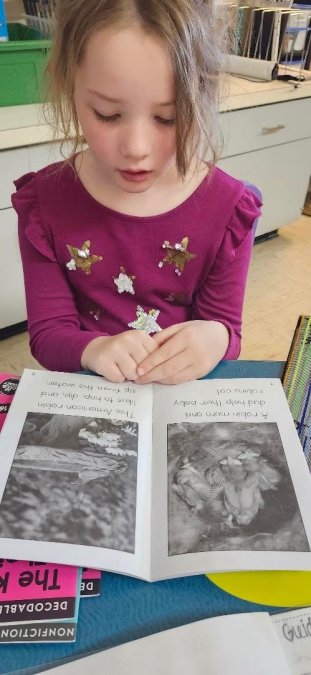
A child at a desk with a decodable book open in front of them, hands on the open book, face showing concentration and determination as they sound out letters
In a decodable text, phonics skill progression is explicit and systematic. If a student has learned the short /a/ sound and consonant sounds /m/, /t/, /p/, and /s/, they can decode words like "mat," "sat," "tap," and "map." When the lesson introduces the /sh/ digraph, the next decodable book contains words like "shall," "shell," and "shim," but no words with unintroduced patterns.
This structure serves a specific purpose: it gives students the chance to apply newly taught phonics skills in connected text without cognitive overload from guessing. When a child encounters an unfamiliar word, they use letter-sound correspondence to decode it. This act of decoding builds orthographic mapping, the mental process that turns sounding-out into automatic word recognition.
Decodable books typically follow a scope and sequence aligned with explicit, systematic phonics instruction. Research emphasizes that students need multiple exposures to apply a new skill. A well-designed decodable library includes both fiction and nonfiction texts targeting the same phonics skill, so students encounter the pattern repeatedly across different contexts.
Understanding Leveled Readers and Text Complexity
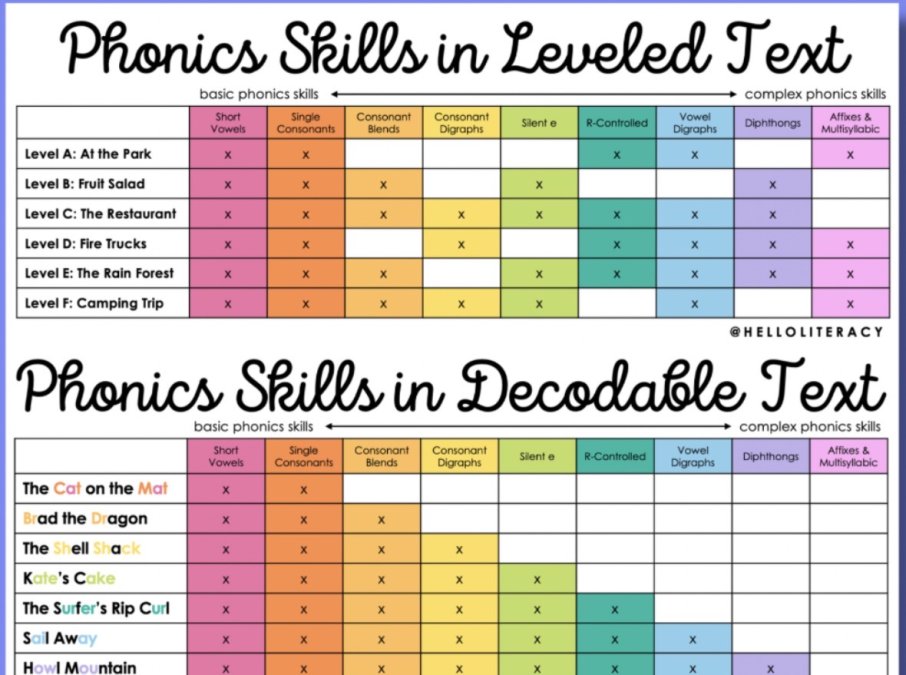
Leveled readers are books organized by reading difficulty level, typically determined by vocabulary, sentence length, and conceptual complexity. A level A book is easier than a level B book, which is easier than a level C book. However, the organizing principle is NOT phonics skill progression, it's overall text difficulty and theme.
Leveled books are designed for guided reading instruction and independent reading practice, not for teaching phonics skills. They prioritize meaningful, engaging content and thematic coherence over phonics control. A level A leveled book might include the word "elephant," even if students haven't learned the /el/ blend, because the story's animal theme requires it. Students reading leveled books are expected to use multiple cueing systems: phonics, picture cues, context clues, and sight word recognition.
Text complexity in leveled readers increases gradually across levels. A level A book has shorter sentences, simpler vocabulary, and more repetition. A level C book has longer sentences, more varied vocabulary, and less repetition. But at every level, the book contains words using phonics patterns the student may not have learned yet.
Science of Reading and Decodable Text
The Science of Reading research emphasizes that beginning readers learn to read through explicit, systematic phonics instruction combined with practice applying those skills in connected text (the NIH). Decodable books are the tool that makes this application possible.
Research on orthographic mapping shows that students develop automatic word recognition through repeated, accurate decoding practice (peer-reviewed research). When a student sounds out a word correctly multiple times, the brain's visual system "maps" the letter sequence to the sound sequence and meaning. Leveled books interrupt this process because they introduce words students cannot decode, forcing them to guess or rely on context, which bypasses the decoding practice that builds orthographic mapping.
The Science of Reading framework also emphasizes the importance of a systematic scope and sequence in phonics instruction. Skills should be taught in logical order, from simpler to more complex patterns, with cumulative review. Decodable books align with this scope and sequence. Each book targets specific phonics skills in the order they're taught, and previously learned skills appear repeatedly for reinforcement. Leveled books don't follow a phonics scope and sequence because their organization is thematic, not skill-based.
This alignment between explicit phonics instruction and decodable reading practice is what makes the Science of Reading approach effective, particularly for beginning readers and struggling readers who need structured, sequential skill building.
Benefits of Decodable Books for Early Readers
Decodable books offer specific advantages for students learning to decode. First, they build confidence. When every word can be decoded using known phonics patterns, students experience success and finish feeling capable, not frustrated.
Second, decodable books provide the high-frequency, cumulative practice that reading development requires. A student learning the /sh/ digraph encounters it in their phonics lesson, then in their decodable book, then in the next decodable book where /sh/ appears alongside other learned patterns. This repetition strengthens decoding skills and accelerates the shift from conscious sounding-out to automatic word recognition.
Third, decodable books reduce cognitive load. A beginning reader's working memory is limited. If they're using mental energy to guess words from pictures or context, they have less capacity for comprehension. Decodable books eliminate guessing, freeing cognitive resources for understanding.
Fourth, decodable books enable effective differentiation. Because they're organized by phonics skill, not reading level, a third-grader reading at a kindergarten level can use decodable books targeting early phonics skills without babyish content. The material can be age-appropriate even when phonics skills are foundational. homeschool reading supplements.
For struggling readers and students with reading disabilities like dyslexia, decodable books are often essential. These students need explicit decoding practice without the interference of undecodable words.
How to Use Decodable Books in the Classroom
Decodable books work best when paired with explicit, systematic phonics instruction. The typical sequence is: teach a phonics skill in a small group lesson, then have students read a decodable book targeting that skill.
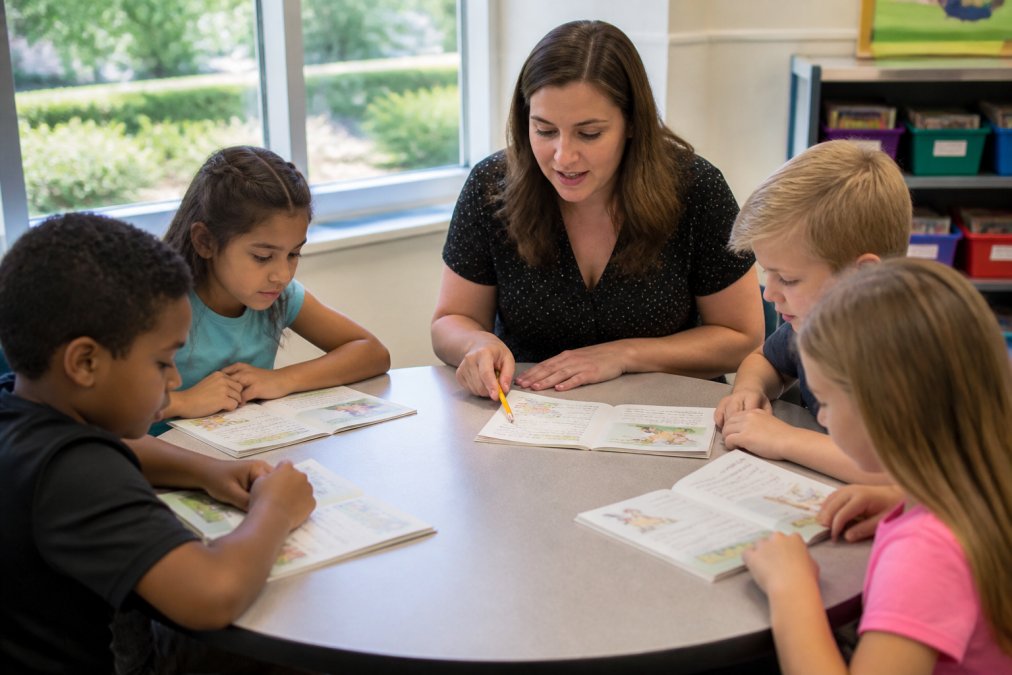
A teacher seated at a round table with four elementary students, each holding an open decodable book, the teacher pointing to text with a pencil while students follow along, bright classroom window lighting the scene
In the classroom, decodable books are most effective in small group phonics instruction. Students grouped by phonics skill level (not reading level) work through books aligned to the skills they're learning. This allows teachers to differentiate without stigmatizing students.
Decodable books can also be used for independent reading practice, rereading, and take-home reading. Rereading decodable books builds fluency. The first read requires careful decoding; subsequent reads become faster and more automatic.
Once students have built foundational decoding skills, they benefit from reading a variety of texts, including leveled books, chapter books, and authentic literature (the CDC). But in the beginning stages of reading instruction, typically kindergarten through early second grade, or longer for struggling readers, decodable books are the most effective tool for building accurate, automatic decoding skills.
Why No Correlation Chart Exists Between Decodable and Leveled Books
Educators frequently search for a chart showing how decodable book levels correlate to leveled book levels. No such chart exists, and it shouldn't, because the systems measure different things.
Decodable books measure phonics skill mastery. A student reading decodable book 15 has mastered phonics skills 1 through 15 in the scope and sequence. This says nothing about their reading level in the traditional sense. Reading level depends on vocabulary knowledge, background knowledge, sentence complexity, text length, and comprehension ability, not phonics skill alone.
A student might have strong phonics skills but limited vocabulary or background knowledge. They might decode every word but not understand the text. Conversely, a student with rich vocabulary and background knowledge might struggle with decoding if they haven't had systematic phonics instruction. These are separate dimensions of reading ability.
Leveled books measure overall text difficulty, which includes but is not limited to decoding difficulty. A level C leveled book is harder than a level A book because it has longer sentences, more complex vocabulary, and more sophisticated concepts. But this doesn't mean students can decode every word without guessing.
The confusion arises because both systems use numbers or letters to indicate progression. But they're measuring different constructs. Using them interchangeably creates instruction that doesn't align with either system's purpose.
A more accurate approach is to assess students separately on both dimensions: Where are they in the phonics scope and sequence? And what level of overall text complexity can they handle? These questions have separate answers, and instruction should address both.
Conclusion
The difference between decodable books and leveled books is fundamental to how students learn to read. Decodable books are skill-based tools designed to give students practice applying phonics skills they've explicitly learned. Leveled books are thematic tools designed to provide engaging reading practice at increasing levels of difficulty. They serve different purposes in a comprehensive reading program.
Understanding this distinction changes instructional decisions. It explains why a student might decode a decodable book fluently but struggle with a leveled book at the same "level." It clarifies why decodable books are essential for beginning readers and struggling readers, not optional extras. It shows why no correlation chart exists, because you're not comparing apples to apples.
Building a reading program that works means using the right tool for the right purpose. When you need students to practice applying phonics skills, decodable books are the evidence-based choice. Hello Decodables provides systematically sequenced decodable books aligned to explicit phonics instruction, with both fiction and nonfiction texts targeting the same phonics skills. The Decodable Readers Complete Library includes 120 books designed to give students the repeated, cumulative practice that builds confident, fluent readers. For homeschool families, the Fiction Decodables Homeschool Pack and Nonfiction Decodables Homeschool Pack offer complete, sequenced collections aligned to systematic phonics instruction.


Frequently Asked Questions
Why is there no correlation chart between decodable and leveled books?
Decodable books and leveled books are designed for entirely different purposes, making a correlation chart impossible. Decodable books are skill-based—they contain only words using phonics skills students have explicitly learned. Leveled books are theme-based and include words with all phonics patterns, whether taught or not. A student reading a Level A book may encounter words requiring phonics knowledge they haven't yet acquired, while a decodable book ensures every word is decodable using learned skills. These fundamentally different structures mean they cannot be mapped to each other.
How do decodable books support structured literacy and the science of reading?
The science of reading emphasizes explicit, systematic phonics instruction followed by application in connected text. Decodable books provide that application phase. They align with a structured phonics scope and sequence, allowing students to practice newly taught letter-sound correspondence, phonemic awareness, and decoding skills in actual reading. This controlled practice builds orthographic mapping—the brain's ability to recognize words automatically—which is essential for reading fluency and comprehension. Leveled books, by contrast, do not follow a phonics sequence and may introduce words students cannot yet decode.
What happens when students read leveled books before mastering foundational phonics?
When students encounter leveled books too early, they often resort to guessing from pictures, context, or word shape rather than using decoding skills. This develops sight-word dependency instead of building true decoding ability. Students may appear to be reading but are actually memorizing. For struggling readers and beginning readers especially, this approach delays the development of independent word recognition and reading proficiency. Decodable books prevent this by ensuring every word can be decoded using taught skills, building confidence and actual reading competence.
How do I choose the right books for a student's phonics progression?
Match the book to the student's phonics instruction, not their grade level. Use a quick placement assessment to determine which phonics skills the student has mastered. Then select decodable books that target the next skill in sequence while reviewing previously learned patterns. For example, if a student has mastered short vowels and is learning the /sh/ sound, choose a decodable book focused on /sh/ that contains only CVC words and previously learned patterns. This ensures success and builds fluency. Avoid leveled books during the foundational phonics stage; reserve them for students who have developed automatic word recognition.
This article was written using GrandRanker